
Caleb Lawson
Libraries
Reviews
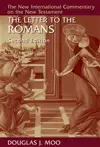
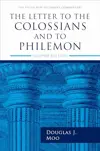
The Letters to the Colossians and to Philemon (2nd ed.). PNTC. Eerdmans, 2024.
Caleb Lawson
 September 24, 2026
September 24, 2026
Simply phenomenal. Moo has quickly become the standard for me in terms of what the ideal commentary for pastors looks like. I'd interacted with his NICNT on Romans for Rom. 4, 6, & 7, but this was the first time actually sitting down and working through an entire work of his. If you are a pastor preaching expositionally through the book, this is what you're looking for. Moo simply works through the text, makes various syntactical observations, points to differing options, presents the best arguments for them, comes to his own reasoned conclusion, and offers theological insights all along the way. I essentially stopped consulting Dunn's NIGTC commentary because Moo would say what his conclusions were when relevant. If you could only have one commentary on Colossians (or Philemon), this would be my pick. As I mentioned previously, Arnold's new WBC work on Colossians is a VERY close second. If you can grab both, I think you're very well set to work through Colossians. Moo gets the nod for: 1) the format & layout of the WBC is awful, 2) I enjoy Moo's concise writing style more (he typically says more in saying less), and 3) You also get a great commentary on Philemon.
Nahum. ZECOT. Zondervan, 2017.
Caleb Lawson
September 3, 2026
September 3, 2026
Not entirely satisfied with this commentary, but of all that I consulted on Nahum it is probably the best bang for your buck. That being said, the NAC volume by Barker & Bailey on Micah–Zephaniah is a very close second, such that if you already have that one I don't think you need Timmer's. Robertson's NICOT is also not bad. But, I will say I wasn't in love with any of them. I especially felt on broader Biblical-Theological themes they were lacking. Moreover, I didn't find much help for pastors in terms of homiletical suggestions/routes to take in preaching. Good exegetical work, but not much "bridging the gap" for the preacher, which for a difficult book like Nahum, would have been really helpful.
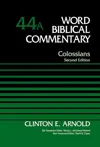
Colossians. WBC. Zondervan Academic, 2025.
Caleb Lawson
July 29, 2026
July 29, 2026
This was a joy to use preaching through Colossians. If you could only have one commentary on Colossians, Arnold might be the one you get (although I think I slightly prefer Moo). This is an excellent and exhaustive work on Colossians that reminded me of Hoehner's work on Ephesians. An 800 page commentary on Colossians is simply a lot for a book only 4 chapters long. Much of that comes in Arnold's introduction (the commentary on the text itself begins on pg. 253) which I simply didn't have time to read all of. There's many highlights I could mention, but I'll just say a few:
1) His excursus on "filling up the afflictions of Christ" (Col. 1:24) was very helpful. I agree/was convinced by his view of seeing Paul functioning in the role of Christ, the Suffering Servant (Isa. 53, cf. Acts 13:47 and Isa. 49:6). 2) Also a great excursus on the "elemental spirits" (Col. 2:8, 20). I believe they are demonic spirits as does Arnold. 3) Also really helpful work on Col. 2 with the "worship of angels" and the other odd words and phrases in Col. 2. Simply put, we don't really know what was going on in Colossae. But contra Dunn, it doesn't seem to just be Judaism. Arnold does extensive work here showing the pagan/syncretistic practices that seemed to be taking place.
In all, highly recommended for Colossians. I've already learned: Don't get tons of commentaries on a book. In my opinion, get the top 3 or maybe 4 and stick with those. You just don't need to waste time in sermon prep going through commentaries that usually end up saying what you already discovered in your own exegesis.
Daniel. ZECOT. Zondervan Academic, 2023.
Caleb Lawson
December 3, 2024
December 3, 2024
I really was not impressed with this commentary. To begin with, the commentary takes a rather critical-liberal view of authorship and dating which surprised me given the solidly evangelical and conservative editors like Daniel Block and Stephen Dempster. Widder rejects a 6th century date, suggests “vaticinium ex eventu” prophecy (prophecy "after the fact" i.e. not prophecy in any real sense of the word) might be used, and readily admits of significant historical errors in the book. In the same vein, she argues for the "Greek view" of Dan. 2 & 7 which doesn't see Rome mentioned at all as the 4th kingdom. She also argues (quite unconvincingly) the "stone" of Dan. 2:45 refers to the people of God, not the Messiah which was a novel view to me. The "70 weeks" of Dan. 9:24 are to be interpreted symbolically, the Messiah in Dan. 9:25 & 26 refers to the high priests Joshua and Onias III, and pretty much everything was fulfilled in the 2nd century BC. I certainly disagree with these views and conclusions, but furthermore, I just didn't find the main body of the commentary all that compelling. There simply weren't many "exegetical gems" that make a great commentary. Not recommended for conservative evangelical pastors or students of God's Word... although if that doesn't describe you, maybe this is right up your alley!
Daniel. EEC. Lexham Press, 2020.
Caleb Lawson
November 13, 2024
November 13, 2024
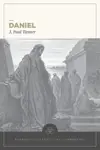
A remarkable commentary. Tanner's work is probably the most expansive and thorough commentary from a conservative evangelical viewpoint available. His introductory remarks on dating, authorship, and identifying "Darius the Mede" alone are excellent. He additionally has an extensive section detailing Daniel's prophecy of 70 weeks. Throughout, I think he is quite fair to other viewpoints, but at the same time points out their flaws before presenting his own view which is always based on careful exegesis of the details of the text. Now, if you are Amillennial, you certainly won't agree with all of Tanner's conclusions, although I think you would be pressed to defend your argument in a better light. I believe Daniel in particular is one of the strongest arguments for a Premillennial interpretation of Rev. 20 and the fulfillment of God's kingdom promises, and I was only further strengthened in that belief by Tanner's work here. The only critique I can offer would be editorial in that some structural features of the book are not consistent (i.e. "Commentary" headings sometimes in bold, sometimes just in italics, etc.). Highly recommended if you are teaching/preaching through Daniel or if you just want a reliable guide to a difficult book.
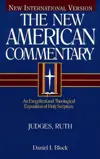
Micah, Nahum, Habakkuk, Zephaniah. NAC. Broadman & Holman, 1998.
Caleb Lawson
June 13, 2024
June 13, 2024
Between O. Palmer Robertson and Richard D. Patterson, I've found this to be the most helpful.
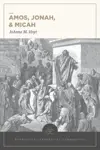
Amos, Jonah, and Micah. EEC. Lexham Press, 2019.
Caleb Lawson
April 11, 2024
April 11, 2024
So far, this is an incredible commentary on Amos, Jonah, & Micah. Close attention to the Hebrew text and wonderful exegetical observations to assist in preaching & teaching. Highly recommended
From Eden to the New Jerusalem: An Introduction to Biblical Theology. Kregel Academic, 2009.
Caleb Lawson
April 23, 2020
April 23, 2020
If there was one book to read or give someone on Biblical Theology it would probably be this one. An excellent introduction to some of the major themes of the Biblical narrative. The chapter on the temple and tabernacle alone is worth the purchase. Essentially, as the title suggests, Alexander uses Gen. 1-3 and Rev. 20-22 as a grid to frame the greater Biblical metanarrative and it is a joy to behold the beauty of Scripture revealed before your eyes. Excellent book!