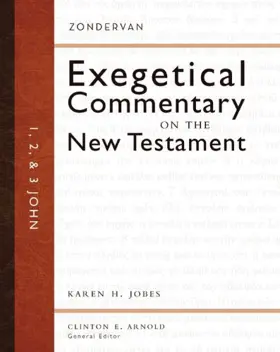
1, 2, and 3 John
in Zondervan Exegetical Commentary on the New Testament
Pages
352
Publisher
Zondervan
Published
2/11/2014
ISBN-13
9780310244165
This series is designed for those who know biblical languages. It is written primarily for the pastor and Bible teacher, not for the scholar. That is, the aim is not to review and offer a critique of every possible interpretation that has ever been given to a passage, but to exegete each passage of Scripture succinctly in its grammatical and historical context. Each passage is interpreted in the light of its biblical setting, with a view to grammatical detail, literary context, flow of biblical argument, and historical setting. While the focus will not be on application, it is expected that the authors will offer suggestions as to the direction in which application can flow.
Collections
This book appears in the following featured collections.
- Basic Library Booklist by Detroit Baptist Theological Seminary
- Commentaries by Female Scholars by Best Commentaries
- Women and BIPOC by Jamie Davies
- Nijay Gupta's Top NT Commentaries by Nijay K. Gupta
- Recommended New Testament Commentaries for Evangelical Pastors by Thomas R. Schreiner
- TGC: Scholarly Commentaries by The Gospel Coalition
Reviews
DavidH
 August 12, 2026
August 12, 2026
Jobes combines careful Greek exegesis, literary sensitivity, theological reflection, and practical usefulness exceptionally well. One of the commentary’s chief strengths is her methodological restraint: rather than reconstructing an elaborate Johannine community or identifying the opponents with excessive precision, she allows the letters themselves and their relationship to the Fourth Gospel to establish the interpretive framework. This produces some genuinely fresh readings. Her treatment of 1 John 3:9 is especially noteworthy: she rejects the common grammatical shortcut that the present tense by itself means Christians do not sin “habitually,” gives proper weight to anomia in 3:4, and connects the passage with the “sin leading to death” later in the letter. The ZECNT format also works unusually well here, making syntax, structure, theology, and application readily accessible. Jobes is one of the best choices for readers wanting rigorous exegesis without losing sight of the theological and pastoral purpose of the letters.
The Gospel Coalition
 June 1, 2024
June 1, 2024
Given John’s dense diction which bears painstaking dissection, Jobes’s careful breakdown and outline of each verse and clause are invaluable. Her deft and clear explanations of the sometimes gnarly Greek uncover nuances English translations conceal. She’s in touch with scholarly literature but fresh and independent in her own analysis.
[Full Review]
Robert M. Bowman Jr.
 December 10, 2016
December 10, 2016
Most up-to-date evangelical commentary on the epistles.
[Full Review]