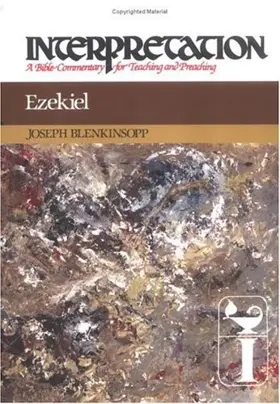
Ezekiel
in Interpretation: A Bible Commentary for Teaching and Preaching
Pages
242
Publisher
Westminster John Knox
Published
1/1/1990
ISBN-13
9780804231183
Reviews
DavidH
 July 19, 2026
July 19, 2026
Blenkinsopp’s Ezekiel is concise, learned and historically stimulating, but it should be used critically because at several points disputed editorial reconstructions are expressed with more confidence than the evidence appears to warrant. He says there can be “little doubt” that the signs in Ezekiel 12 were expanded after Jerusalem’s fall, although their literary coherence and differences from Zedekiah’s recorded escape permit a more limited explanation; similarly, he identifies a current of antifeminism in Ezekiel 23 and attributes verse 48 to a later commentator, although the verse fits the passage’s concluding judgment sequence. Most troubling is his treatment of Ezekiel 30: he calls the image of God breaking Pharaoh’s arms “sadistic” and says the second arm is broken “just to make sure,” even though “arm” is a conventional metaphor for military power—Egypt is disabled while Babylon is strengthened. He then broadens the discussion by citing biblical commands he describes as genocide, a theological leap not established by this particular metaphor. He is also inconsistent in dismissing psychiatric diagnoses of Ezekiel as too speculative while later describing him as catatonic and proposing a clinical condition of aphasia; prophetic restraint, mourning, symbolic performance and ancient descriptions of divine overpowering offer historically appropriate alternatives. Blenkinsopp describes older appeals to God’s reputation as “theologically naive” self-interest, although he fairly acknowledges that Ezekiel’s theology means more than this; nevertheless, the wording underplays how God’s name represents covenant faithfulness expressed through compassion, cleansing and restoration. In Ezekiel 44 he identifies the excluded people as ethnic foreigners and contrasts the restriction with Isaiah and Christianity’s more open approach, but they may instead be cultic outsiders to Aaronide priesthood, while chapter 47 grants resident aliens equal inheritance. His claims that rival priests were subordinated, that the Zadokites supplied a “fictitious pedigree,” and that the conflict involved control of the temple’s spiritual and material resources remain contested historical reconstructions. Likewise, although he considers the present placement of Gog problematic and dates the section beginning at 38:17 considerably later than Ezekiel, chapters 38–39 naturally presuppose the restoration of chapters 34–37 and prepare for God’s return in chapters 40–48. Fairly, however, Blenkinsopp may be substantially right about the nonfulfilment of the Tyre prediction, genuine compositional tension exists in the Gog material, and Ezekiel’s “not-good statutes” remain disputed. Overall, the volume contains valuable insights, but some confident editorial judgments and pejorative theological language outrun the exegesis, making a fuller, more textually attentive commentary an essential companion.
G Ware
May 17, 2018
May 17, 2018
At less the 250 pages, one wouldn't think anyone could possibly provide sufficient detail on a book the size of Ezekiel to be much help for anything, but this is incredibly good; a fine pastoral focused commentary. Blenkinsopp is a Roman Catholic critical scholar, who usually writes for a more scholarly audience, but here he condenses extensive knowledge and research into something to make a very strange book preachable.
Denver Seminary Journal
 June 16, 2008
June 16, 2008
An effort by a critical scholar to judiciously utilize scholarship for preaching concerns.
[Full Review]