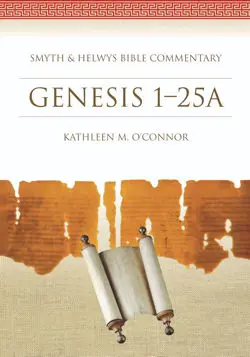
Genesis
in Smyth & Helwys Bible Commentary
Genesis 1–25A
Pages
408
Publisher
Smyth & Helwys
Published
8/10/2018
ISBN-13
9781641730525
Genesis 25B-50
Pages
330
Publisher
Smyth & Helwys
Published
9/1/2020
ISBN-13
978-1-64173-260-4
This commentary views the book of Genesis as a sacred text that, in conjunction with other biblical books, enabled the people of Judah/Israel to begin anew after the nation’s destruction by the Babylonian Empire.
In Genesis, the Creator God brings forth life by the Word alone. Stories of disaster and destruction, often a crux of interpretation, find new resonance when set against the backdrop of a nation scattered and in disarray, for they reflect the suffering and theological dilemmas of invasion and warfare. The promises of God to Abraham form the heart of the book and offer more than mere survival; they promise abundant life, children beyond counting, overflowing blessings, and life begun again in the land. Genesis is a profound resource of faith for all communities and individuals who have known loss and seek new life.
In Genesis, the Creator God brings forth life by the Word alone. Stories of disaster and destruction, often a crux of interpretation, find new resonance when set against the backdrop of a nation scattered and in disarray, for they reflect the suffering and theological dilemmas of invasion and warfare. The promises of God to Abraham form the heart of the book and offer more than mere survival; they promise abundant life, children beyond counting, overflowing blessings, and life begun again in the land. Genesis is a profound resource of faith for all communities and individuals who have known loss and seek new life.
Collections
This book appears in the following featured collections.
- Commentaries by Female Scholars by Best Commentaries
- Top Old Testament Commentaries by Engaging Scripture (Nijay Gupta's Substack)
- Commentaries by Roman Catholic Scholars by Best Commentaries
Reviews
DavidH
 April 2, 2026
April 2, 2026
O’Connor’s Genesis is a creative and pastorally sensitive commentary, especially strong on suffering, threatened futures, and the experiences of women, but its trauma/exilic framework is often too controlling and more confidently stated than the evidence warrants. That lens can be illuminating in major disaster texts, yet O’Connor never really explains what passages such as Genesis 24, 26, 36, and parts of 47 are doing in a book supposedly shaped primarily as trauma theology; those chapters suggest that Genesis is also preserving kinship memory, tracing genealogical continuity, mapping relations with neighboring peoples, and narrating ordinary providence, not simply processing catastrophe. Readers seeking firmer guidance on literary structure, philology, and narrative flow will usually do better with Wenham or Hamilton, while Goldingay offers a more balanced modern critical alternative. O’Connor is therefore best used as a stimulating supplementary voice rather than a primary Genesis commentary.

Expert study of Genesis that is attentive to the literary artistry of this foundational OT book. Great for classroom, Bible study, and fodder for preaching.
[Full Review]