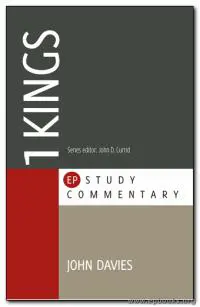
1 Kings
in Evangelical Press Study Commentary
Pages
448
Publisher
Evangelical Press
Published
9/21/2012
ISBN-13
9781783970384
1 Kings recounts what happens to David's kingdom following his death, dealing with why Judah came into the sorry state that led, eventually, to exile. Is there hope in the midst of God's judgement on His people? Dr Davies shows the faithfulness of God, despite the people's unfaithfulness, as a theme that runs throughout the bookl of Kings. God's power and grace are shown to His covenant people.
The reader who comes to 1 Kings with the tumultuous events of 2 Samuel in mind will be expecting a resolution to them, particularly the narrative concerning the succession (2 Samuel 9–20) and there is considerable literary and theological interaction between the two books.
The division of Kings into two books is a later development, and we must regard the story of 1 Kings as leading into the traumatic Judean exile to Babylon with which 2 Kings concludes. The book of Kings, therefore, finalised some time after the beginning of the exile (though evidently making use of earlier sources), wrestles with the question of how Judah (all that is left of Israel) came to this sorry state, with its glorious temple in ruins and its citizens once more subject to a foreign king. This is no more than the people and their kings deserve, according to the theology outlined in the Pentateuch, particularly the book of Deuteronomy.
Reviews
DavidH
 August 8, 2026
August 8, 2026
John Davies’s commentary on 1 Kings is one of the most underrated volumes I encountered. Although written primarily for pastors and students, it contains a surprising amount of original literary and biblical-theological exegesis. Davies reads 1 Kings against the wider story from Genesis to Kings, tracing creation, Eden, exodus, Abrahamic, Mosaic and Davidic themes through the narrative. Particularly stimulating is his portrayal of Solomon as a potential new Adam: the language of wisdom and “discerning good and evil,” Solomon’s connections with Egypt, the abundance of his kingdom and his eventual fall all participate in a larger creation–fall pattern. Davies also makes perceptive observations throughout the prophetic narratives rather than confining his originality to Solomon. Some proposed verbal and numerical patterns are more persuasive than others, but the commentary repeatedly generates worthwhile exegetical insights while remaining conservative, readable and pastorally useful. A genuine hidden gem.