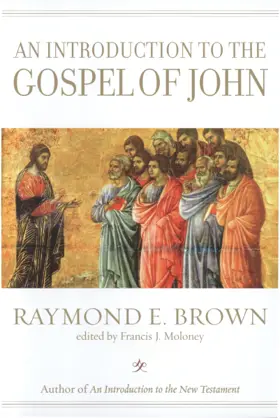
An Introduction to the Gospel of John
in Anchor Yale Bible Reference Library
Pages
384
Publisher
Yale University Press
Published
5/1/2003
ISBN-13
9780300140156
When Raymond E. Brown died in 1998, less than a year after the publication of his masterpiece, An Introduction to the New Testament, he left behind a nearly completed revision of his acclaimed two-volume commentary on the Gospel of John. The manuscript, skillfully edited by Francis J. Moloney, displays the rare combination of meticulous scholarship and clear, engaging writing that made Father Brown’s books consistently outsell other works of biblical scholarship.
An Introduction to the Gospel of John represents the culmination of Brown’s long and intense examination of part of the New Testament. One of the most important aspects of this new book, particularly to the scholarly community, is how it differs from the original commentary in several important ways. It presents, for example, a new perspective on the historical development of the Gospels, and shows how Brown decided to open his work to literary readings of the text, rather than relying primarily on the historical, which informed the original volumes. In addition, there is an entire section devoted to Christology, absent in the original, as well as a magisterial new section on the representation of Jews in the Gospel of John.
Reviews
DavidH
 August 12, 2026
August 12, 2026
Brown’s posthumously published Introduction, edited and supplemented by Francis Moloney, is the natural companion to his Anchor commentary and one of the best advanced introductions to John available. Brown revisits composition, history, Synoptic relationships, Johannine community, Judaism, purpose, authorship, Christology, ecclesiology, sacraments and style, but his mature position is noticeably more cautious about allowing hypothetical prehistory to dominate interpretation: historical questions remain important, while the commentator’s primary task is to interpret the Gospel in the form actually transmitted. The interaction between Brown’s historical criticism and Moloney’s narrative-critical additions makes the volume particularly valuable for understanding both older and newer Johannine scholarship.