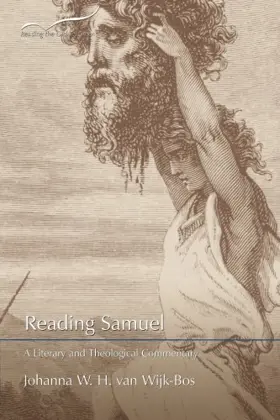
Reading Samuel: A Literary and Theological Commentary
Pages
268
Publisher
Smyth & Helwys
Published
3/13/2012
ISBN-13
9781573126076
Interpreted masterfully by pre-eminent Old Testament scholar Johanna W. H. van Wijk-Bos, the story of Samuel touches on a vast array of subjects that comprise the rich fabric of human life. As it happens, in this volume we view ancient Israel in the era of Samuel, Saul and David. From parental yearning for their young to spousal and sibling relationships, these accounts entail far more than simply a recounting of the central characters lives and circumstances. The reader gains an inside look at royal intrigue, military campaigns, occult practices and the significance of religious objects of veneration. The Reading the Old Testament series will feature 19 volumes of innovative insights by leading biblical scholars. This literary and theological commentary presents cutting-edge research in accessible language that is both coherent and comprehensive.
Collections
This book appears in the following featured collections.
- Commentaries by Female Scholars by Best Commentaries
Reviews
DavidH
 April 17, 2026
April 17, 2026
Van Wijk-Bos writes fluently and gives welcome attention to narrative texture and female characters, drawing well on Fokkelman and Alter. However, the commentary has limitations serious enough to warrant caution. Most concerning is its characterisation of God: she explicitly calls the God of Samuel "inscrutable, cruel, and capricious" (on 2 Sam 24), states that "God can evidently make mistakes," dismisses Samuel's canonical declaration about divine immutability (1 Sam 15:29) as "obviously wrong," and describes the portrayal of God in the census episode as "decidedly offensive" — language absent from every other major Samuel commentary, including the most critically liberal (McCarter AYB, Auld OTL, Klein WBC, Anderson WBC). She unambiguously labels the David-Bathsheba encounter "rape" as settled fact — a contested minority position rejected by all comparison commentaries, which use "adultery" — while elsewhere criticising readers for anachronism, an inconsistency that typifies the book's deeper methodological tension: she champions patient, ambiguity-embracing reading in principle but reaches hostile verdicts on God's character whenever the text is difficult. She also raises the homoerotic reading of Jonathan and David with unwarranted force, compares David's treatment of Moabite prisoners to Nazi death-camp selections (p. 184), and operates from a declared postmodern framework that treats the material primarily as "myth" — a characterisation unique to this commentary. Best used, if at all, alongside a historically and theologically grounded commentary such as Tsumura (NICOT), Firth (ApOTC), or Bergen (NAC).